When to see the Great Migration: a month-by-month guide
Two million animals move in a single, continuous circuit. The question is never whether the migration is happening, but where it is on the day you arrive.
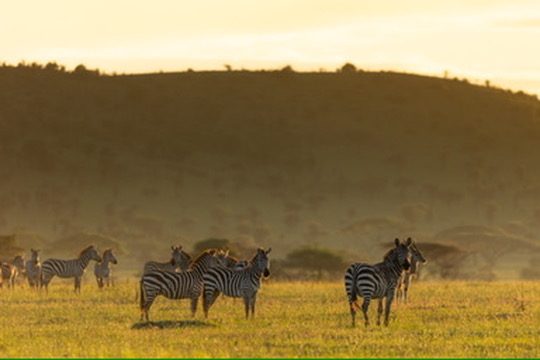
The Great Migration is not an event with a start date. It is a permanent, year-round circuit of roughly two million wildebeest, zebra and gazelle following rainfall and grass across the 30,000 square kilometres of the Serengeti-Mara ecosystem. It never stops, it never leaves Tanzania for long, and it cannot be booked like a show.
What you can do is plan around it. The herds follow the same broad rhythm every year, shifting a few weeks earlier or later depending on the rains. Our guides have watched this circuit for years, and the practical planning question is always the same: which part of the story do you want to see, and where must you sleep to be inside it at dawn?
This guide walks through the migration month by month, names the region you should base yourself in for each window, and is honest about the weeks we would steer you away from if drama is your priority.
- January to March: calving season on the southern Ndutu short-grass plains, with the highest predator activity of the year.
- April to May: the long rains, green landscapes, the lowest prices and the fewest vehicles, but muddier tracks.
- June to July: the herds mass in the Western Corridor for the Grumeti River crossings.
- August to October: the Mara River crossings in the northern Serengeti, the most photographed weeks of the circuit.
- November to December: the short rains pull the herds back south through Lobo and Seronera towards Ndutu.
- Location beats season: sleeping inside the right region is worth more than picking a perfect month.
How the circuit actually works
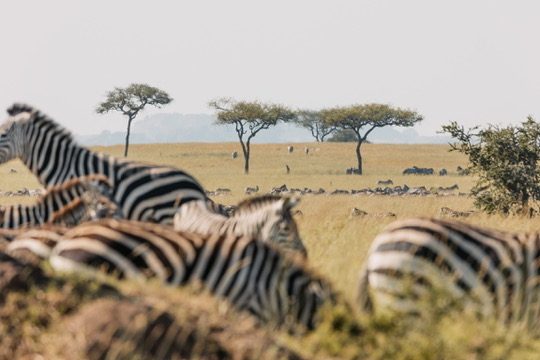
Think of the migration as a slow clockwise loop that begins and ends on the southern short-grass plains around Ndutu and the Ngorongoro Conservation Area. Those plains sit on volcanic ash from the Ngorongoro Highlands, which gives the grass an unusually high calcium and phosphorus content. That is why nearly half a million wildebeest calves are born there, and nowhere else, every February.
As the plains dry out from late March, the herds drift west and north through the Moru Kopjes and Seronera, then into the Western Corridor towards the Grumeti River. By July the front-runners are pushing into the northern Serengeti, and by August they are stacked along the Mara River, testing crossing points that have been used for generations.
The return is quieter and less photographed but no less remarkable. As the short rains break in November, the columns turn south through Lobo and Loliondo, funnel back through Seronera in December, and arrive on the calving grounds ready to start again.
Month by month, and where to sleep
Use this as a planning table rather than a guarantee. The rains shift the timings by two to three weeks in either direction, and we re-check herd positions before confirming any camp.
| Month | Where the herds are | What you will see | Base yourself |
|---|---|---|---|
| January | Ndutu and southern plains | Herds gathering, first calves | Ndutu / Kusini |
| February | Ndutu short-grass plains | Peak calving, constant predator action | Ndutu mobile camps |
| March | Ndutu, drifting west | Late calves, big cat activity | Ndutu / Moru |
| April | Moru Kopjes, central Serengeti | Green season, long columns forming | Seronera |
| May | Central and western Serengeti | Rutting season, dust and noise | Seronera / Western Corridor |
| June | Western Corridor, Grumeti | Grumeti crossings, large crocodiles | Grumeti |
| July | Grumeti moving north | Crossings, herds massing | Grumeti / Lobo |
| August | Northern Serengeti, Mara River | Mara crossings begin in earnest | Kogatende |
| September | Northern Serengeti | Peak Mara crossings | Kogatende / Lamai |
| October | Northern Serengeti | Crossings both directions, thinner crowds | Kogatende |
| November | Lobo and central Serengeti | Short rains, herds turning south | Lobo / Seronera |
| December | Seronera to Ndutu | Columns arriving on the plains | Seronera / Ndutu |
Calving season: the month most travellers overlook
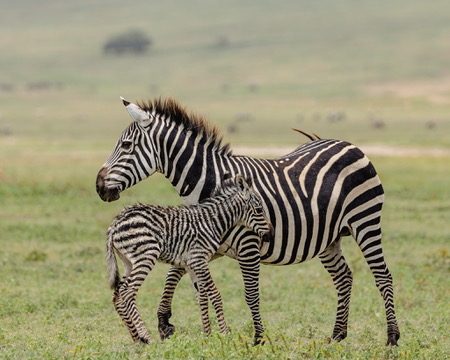
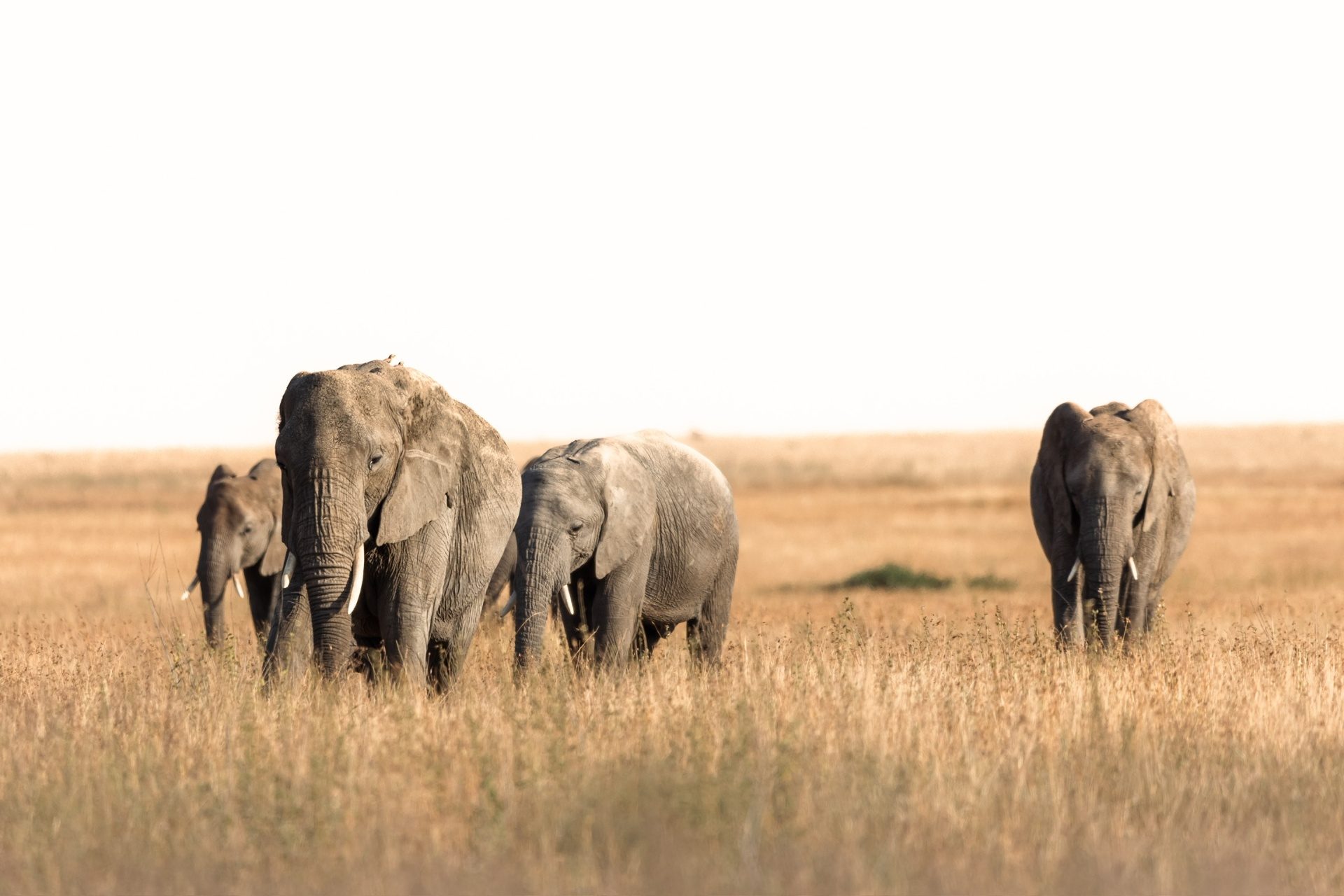
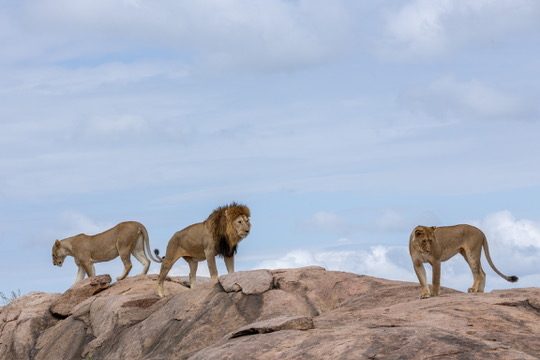
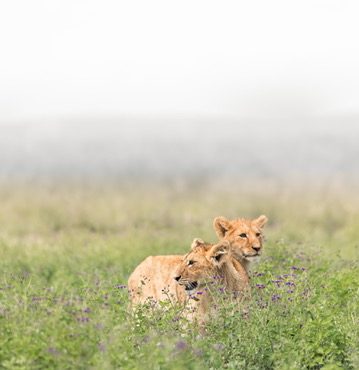
If you want to see predators hunt, February on the Ndutu plains beats a Mara crossing. Around 8,000 calves are born a day at the peak. A wildebeest calf is on its feet within minutes, but a proportion will not survive the week, and every lion pride, cheetah coalition, hyena clan and jackal in the ecosystem knows it.
The landscape helps you as well. Short grass and open horizons mean sightings are visible from a long way off, and the light is clean after the brief afternoon showers. Photographers who care about behaviour rather than headcount tend to choose these weeks and come back for them.
The trade-off is that Ndutu is inside the Ngorongoro Conservation Area, not the national park, and the best camps are mobile ones that follow the herds. They are small and they fill twelve months out. This is the one season where booking late genuinely costs you the experience.
River crossings: what the photographs do not tell you
A Mara crossing is genuinely one of the great wildlife spectacles on earth, and it is also the most misrepresented. Herds gather on the bank for hours. They advance, hesitate, turn back, and gather again. A crossing can erupt in ninety seconds after a four-hour wait, or it may not happen at all that day.
Guests who enjoy crossings most are the ones who commit to at least three nights in the north at Kogatende or Lamai, accept full days in the vehicle with a packed lunch, and treat the crossing as a bonus on top of a landscape already thick with resident game. Guests who allocate one night and expect a crossing on cue tend to leave disappointed.
August to October is also the busiest and most expensive window in the Serengeti. If you want the north without the vehicle density, October is our quiet recommendation: the herds are still moving back and forth across the river, and the crowds have thinned noticeably.
The green season case: April, May and November
Most operators quietly discourage April and May. We do not, provided you understand the trade. The long rains bring afternoon storms rather than all-day drizzle, tracks get muddy, and some seasonal camps close. In return you get emerald plains, dramatic skies, newborn animals across every species, migrant birds, and lodge rates that can be 30 to 40 percent below the August peak.
November's short rains are gentler and shorter, usually an hour of rain in the late afternoon. The herds are streaming south, the dust of October is gone, and the northern circuit is at its most photogenic with almost no traffic.
For a first safari with a fixed budget, a green-season trip with a longer stay usually beats a peak-season trip cut short. More nights in the field is the single strongest predictor of a good safari.
How we plan a migration trip at Karis
We start with the window you can travel, not with a fixed itinerary. Once we know your dates, we place you in the region the herds should occupy, then build the rest of the route around it: Tarangire or Lake Manyara on the way in, Ngorongoro Crater as a guaranteed big-game day, and the Serengeti as the heart of the trip.
We also build in a buffer. A minimum of three nights inside the relevant Serengeti region gives you the flexibility to sit out a slow day. Where the road transfer would eat a full day, we price a fly-in leg so the time goes into game drives instead of gravel.
Every Karis migration itinerary is run in a private vehicle with a pop-up roof, your own guide for the whole trip, and no shared seats, so your day is shaped by what you want to watch rather than by a group vote.
Questions we are asked about this
Let us build this into your journey.
Tell us your dates and what matters most to you. A Karis journey designer in Arusha will reply with a tailored route, camps and full pricing.