
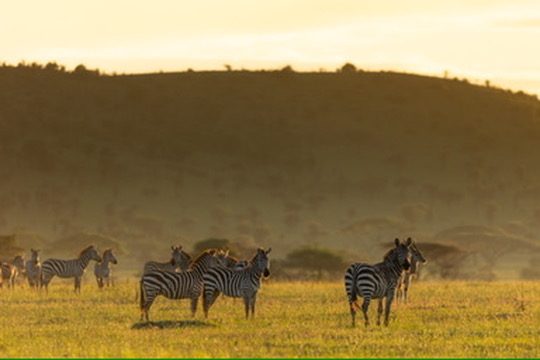
Serengeti National Park
14,750 square kilometres of open plain, riverine forest and granite kopje, staging the greatest wildlife spectacle on earth.
- Size
- 14,750 km²
- Status
- UNESCO 1981
- Wildebeest
- 1.5m+
- Predators
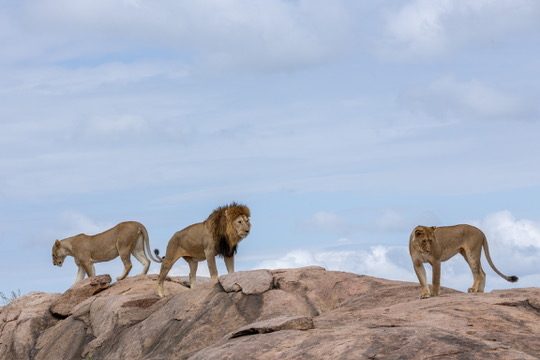
- 3,000+ lion
Guide to Serengeti National Park
Covering approximately 14,750 square kilometres, Serengeti National Park is one of Africa's most iconic wildlife destinations and a UNESCO World Heritage Site. The park is best known for the Great Migration, during which more than two million wildebeest, zebras, and gazelles traverse its vast plains in search of fresh grazing. Beyond the migration, the Serengeti is home to exceptional year-round wildlife viewing, including lions, leopards, cheetahs, elephants, buffaloes, giraffes, and hundreds of bird species. Its expansive landscapes range from endless grasslands to riverine forests and rocky kopjes.
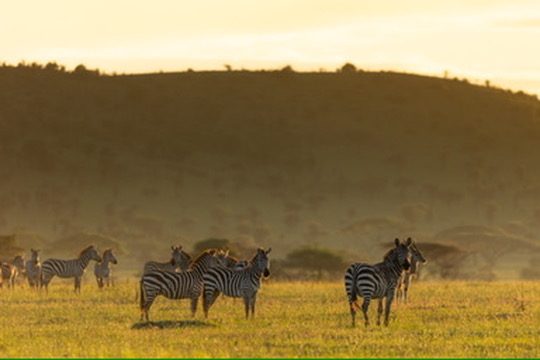
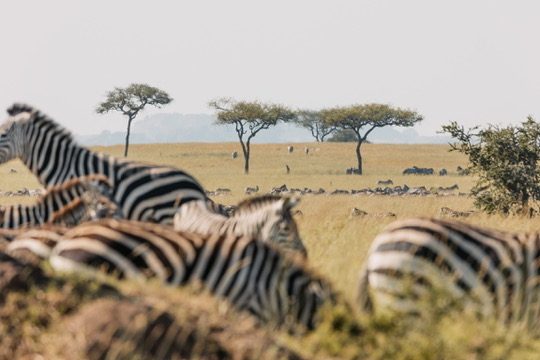
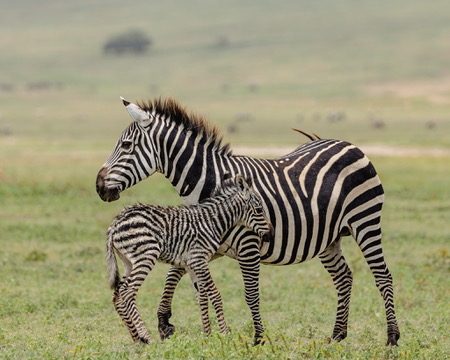
The Serengeti is not one park but a mosaic of ecosystems - the short-grass calving plains of Ndutu, the acacia-studded central Seronera valley, the far-flung western corridor along the Grumeti river, and the wild northern Mara plains that spill into Kenya. Together they form the stage on which 1.5 million wildebeest and 300,000 zebra perform an unbroken migration, followed year-round by the densest concentration of large predators in Africa.
For our Tanzanian guides, the Serengeti is home ground. We have watched the herds cross the Mara at Kogatende in September, sat with lions on the Moru kopjes in June, and listened to the calving thunder of Ndutu in February. This guide distils what we know from eighteen years of driving these plains: when to visit, where to sleep, which region rewards your interests, and how to design a private luxury Serengeti safari that avoids the crowds and delivers the moments you came for.
Why visit the Serengeti
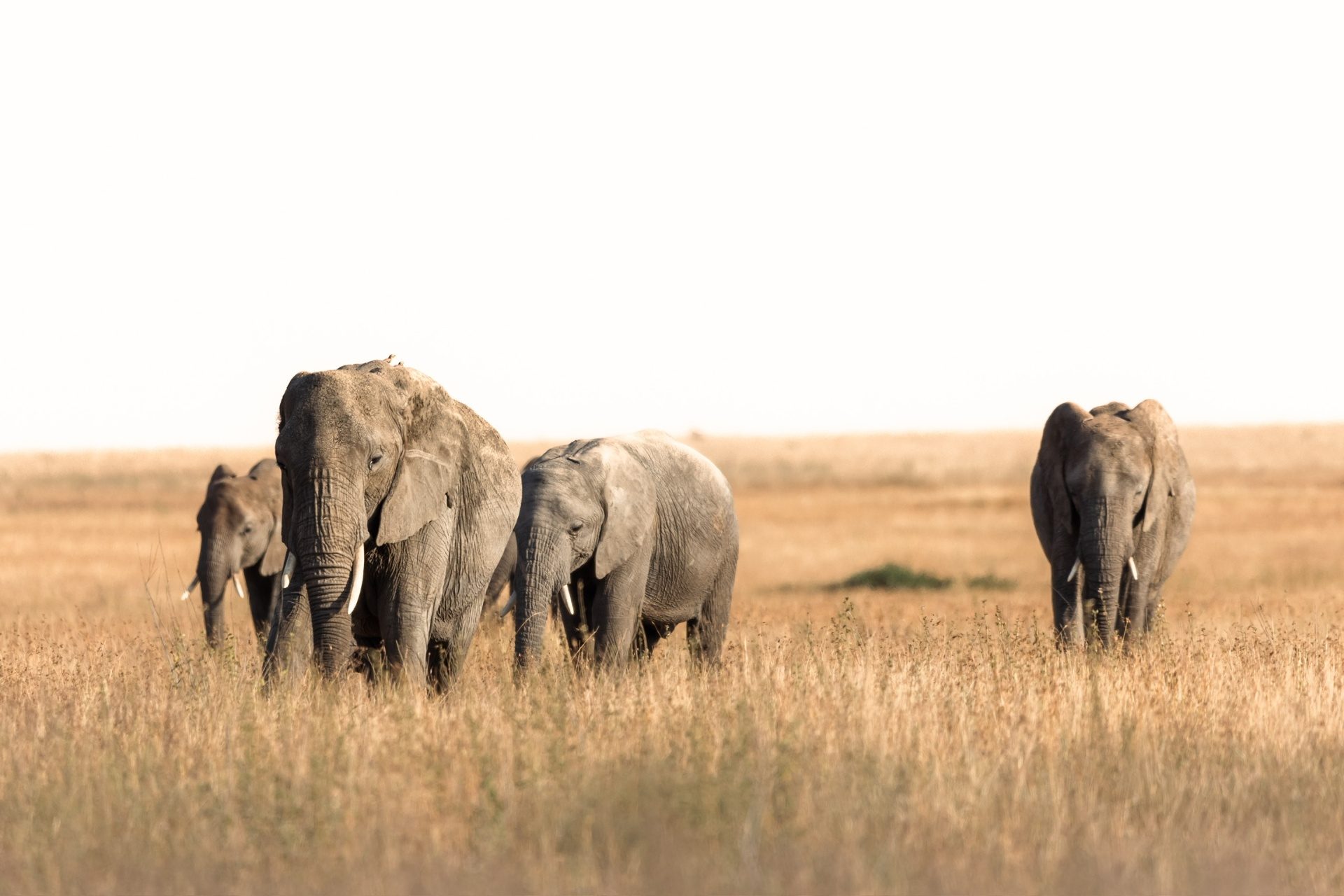
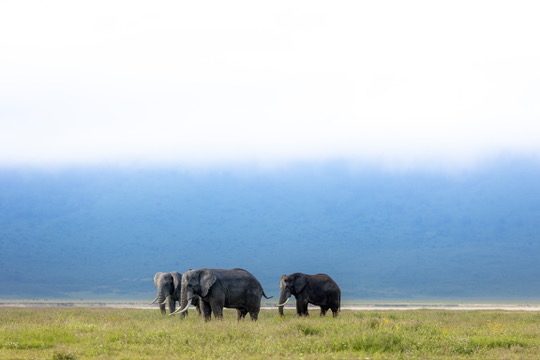
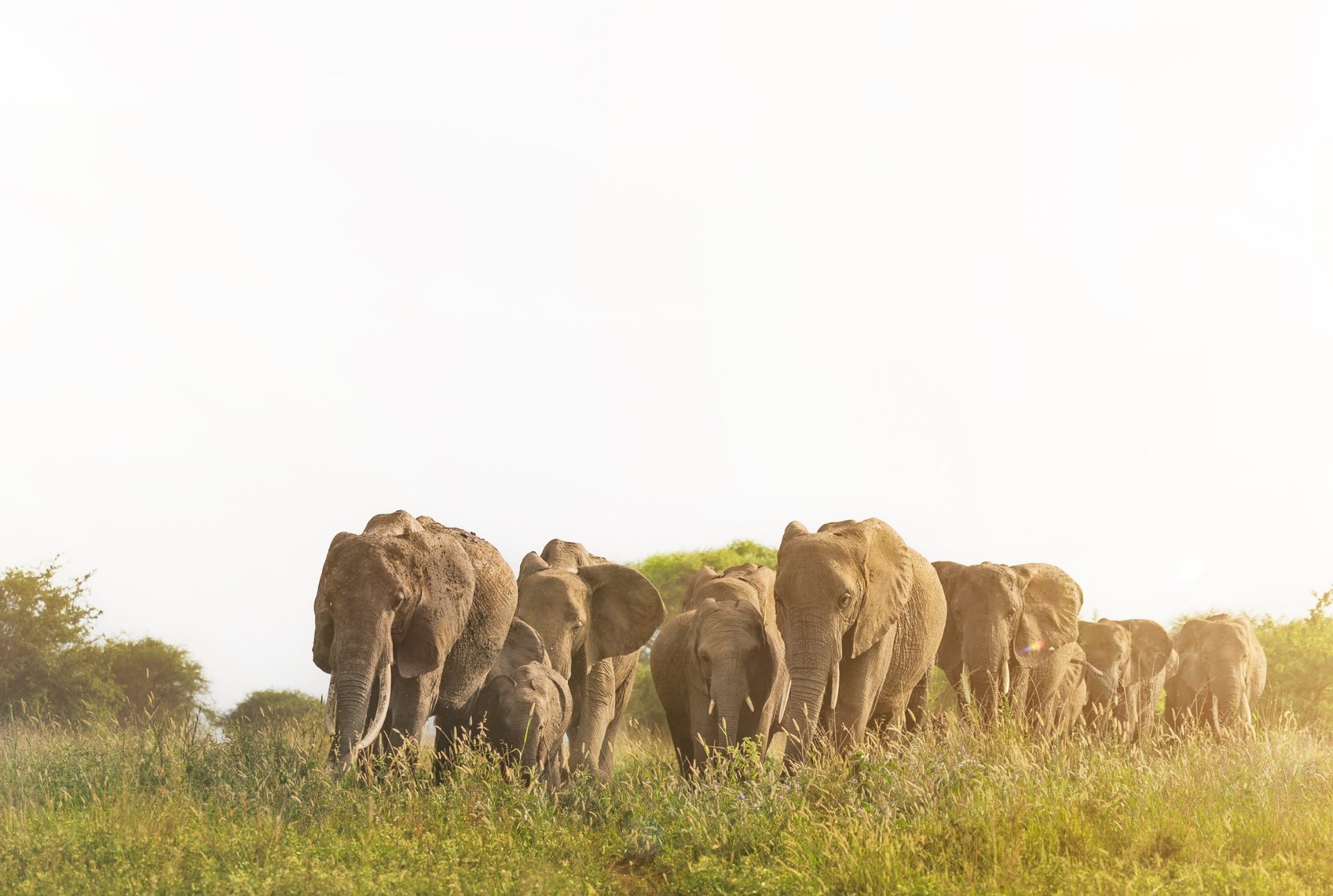
No other African park delivers this scale of wildlife over this size of landscape. The Serengeti holds 4,000+ elephants, roughly 3,000 lions, 1,000 leopards, 550 cheetahs, 500 bird species and every one of the Big Five in stable populations. Densities are highest in the Seronera valley and the northern Mara triangle, where a full-day game drive routinely produces multiple prides, tree-climbing leopards and a cheetah hunt or two.
Beyond the wildlife, the Serengeti offers the widest variety of safari experiences in Tanzania: dawn hot air balloon flights over the plains, walking safaris with armed rangers in the private concessions of the Grumeti and Loliondo, mobile tented camps that move with the migration, and semi-permanent lodges designed by the country's finest safari architects.
For first-time safari travellers, three to five nights in the Serengeti combined with the Ngorongoro Crater is the classic Northern Circuit itinerary. For returning guests and photographers, a longer stay of six to eight nights across two Serengeti regions - typically Central plus North or Central plus Ndutu - captures the depth of the ecosystem in a way a single-camp trip cannot.
A short history of the park
The Serengeti has been inhabited by the Maasai for at least 200 years - the name derives from the Maa word siringet, meaning 'the place where the land runs on forever'. In 1951 the colonial administration gazetted the area as Tanzania's first national park, and in 1959 the Maasai were resettled into the adjoining Ngorongoro Conservation Area under a co-management agreement that persists today.
The park's scientific legacy is defined by the work of Bernhard and Michael Grzimek, whose 1959 aerial census - published as Serengeti Shall Not Die - first documented the migration and made the case for the park's international protection. UNESCO inscribed the Serengeti as a World Heritage Site in 1981. Long-term studies by the Serengeti Lion Project (running continuously since 1966) and the Frankfurt Zoological Society continue to shape conservation policy across the ecosystem.
Geography and regions
The Serengeti sits on the vast Tanzanian plateau at 1,200 to 1,850 metres, straddling volcanic soils in the south-east and older Precambrian granite outcrops - the famous kopjes - in the centre and west. Four broad regions matter for planning a safari:
Southern Serengeti and Ndutu - short-grass plains fed by mineral-rich volcanic ash from Ngorongoro. This is calving country from late January through March, when 8,000 wildebeest are born every day and the predators follow the herds.
Central Serengeti (Seronera) - the year-round wildlife heartland. The Seronera river system supports resident populations of lion, leopard and elephant that do not migrate, making this region reliable in any month. It is also the most accessible and therefore the busiest.
Western Corridor (Grumeti) - a finger of the park that follows the Grumeti river toward Lake Victoria. Best in June and early July when the herds cross the Grumeti and its 6-metre crocodiles.
Northern Serengeti (Kogatende, Lamai) - remote, hilly, cool. Home to the Mara river crossings from late July through October and to the finest permanent leopard sightings in the park year-round.
Wildlife and the Great Migration
The Great Migration is not a single event but a 1,000-kilometre circular journey the herds walk every year, driven by rainfall patterns. Understanding roughly where the herds will be in each month is the single most important factor in choosing when and where to go.
December to March - Southern Serengeti and Ndutu. The herds gather on the short-grass plains around Ndutu, Naabi Hill and Ndoha. Calving peaks in February. Predator action is exceptional.
April to May - Central and Western Serengeti. The herds move north through the central Seronera and out into the western corridor. Long rains fall; camps close in the Mara. Green season photography is superb and rates drop.
June to early July - Western Corridor and Grumeti crossings. Herds cross the Grumeti river. Fewer travellers than the Mara crossings, exceptional lion densities.
Mid-July to October - Northern Serengeti and Mara crossings. The iconic river crossings at Kogatende and Lamai. The highest-value, highest-demand months of the year. Book 12-14 months ahead.
November - herds return south. Short rains begin, herds scatter across the central and eastern Serengeti heading toward Ndutu.
Beyond the migration, the Serengeti's resident wildlife is world-class in any month. Big Five sightings are near-guaranteed on a three-day drive; the park also holds serval, caracal, aardwolf, bat-eared fox and honey badger for the truly patient.
Safari activities
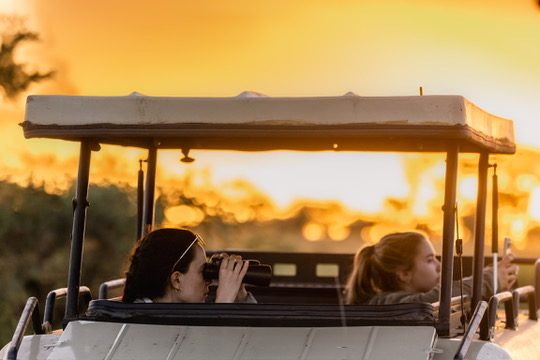
The core activity is the private game drive in an open-sided 4x4, typically split into a long morning drive from dawn (with a picnic breakfast in the bush) and a shorter late-afternoon drive to sundown. In the northern and central Serengeti, full-day drives with a bush lunch are the best way to be present for a river crossing or an unfolding hunt.
Hot air balloon safaris launch at dawn from Seronera, Ndutu and Kogatende - a 60-90 minute silent flight over the plains ending with a champagne bush breakfast. From US$650 per person; we book in advance because seats are limited.
Walking safaris are permitted only in specific concessions (Loliondo, Grumeti, Ubuntu Private) and always with an armed KDU-trained ranger.
Night game drives are offered in the private concessions bordering the park - Grumeti, Loliondo, Nasikia - not inside the park itself.
Cultural visits to authentic Maasai bomas can be arranged in Loliondo or on the Ngorongoro side; we vet villages carefully to avoid staged experiences.
Photography
The Serengeti is a photographer's park. Golden light in the dry season, dramatic storm skies in the green season, and the sheer density of subjects makes even a first-time safari camera-friendly. Bring at minimum a 100-400mm zoom; a 500mm prime or a second body with a 24-70mm for landscapes will separate great work from good.
For dedicated photographic safaris we use custom Land Cruisers with drop-down window pods, bean bags and a maximum of four guests to guarantee every seat is a corner seat. Consider adding a Kogatende or Ndutu-based photographic guide - our senior team includes two published wildlife photographers who can travel with your party.
Birding
The Serengeti hosts over 500 recorded bird species, from lilac-breasted rollers and secretary birds on the plains to Fischer's lovebird and grey-breasted spurfowl (both Serengeti endemics). November through April is peak birding when Palearctic and intra-African migrants swell resident numbers. Serious birders should overnight in the Seronera valley where riverine forest, plains and swamp habitats meet.
Family travel
The Serengeti is one of the most family-friendly parks in Africa. Most camps accept children from 6 or 8 years old, with a handful (Sanctuary Kichakani, Lemala Nanyukie, Melia Serengeti) welcoming families with younger children in private tents. We design family safaris with shorter driving days, mid-morning breakfasts back at camp, and optional bush activities - fossil beds at Olduvai, kopje picnics, ranger-led nature walks for older kids.
For families we recommend fly-in itineraries to minimise road transfer time, and camps with a family tent configuration (two bedrooms sharing a private lounge and deck).
Honeymoon travel
For honeymooners the Serengeti pairs naturally with a Zanzibar beach extension: five nights on safari followed by four or five nights at a boutique beach house on the north-east coast. Our most-requested honeymoon Serengeti camps are Singita Faru Faru, andBeyond Grumeti Serengeti River Lodge, Sanctuary Kichakani Migration Camp, Namiri Plains and Lemala Kuria Hills - each offering private plunge pools, in-tent dining and turn-down that feels considered rather than performative.
Getting there - flights and road access
The Serengeti has six airstrips - Seronera, Grumeti, Kogatende, Lamai (Kuria Hills), Kirawira and Ndutu - all served by scheduled light aircraft from Arusha (JRO or Arusha Airport ARK) and Kilimanjaro International Airport (JRO). Flight time from Arusha to Seronera is 60 minutes; to Kogatende 90 minutes. We use Coastal Aviation, Regional Air and Auric Air.
By road, the drive from Arusha to central Serengeti via Ngorongoro is 8-9 hours, typically broken with a night in the Karatu highlands or at the crater rim. Long road transfers make sense when combined with the Manyara-Ngorongoro-Serengeti circuit; for fly-in travellers, going by air both ways is our default recommendation.
International arrivals: Kilimanjaro International Airport (JRO) is the primary gateway for the Northern Circuit, served by KLM, Qatar, Turkish, Ethiopian, RwandAir, Emirates and Kenya Airways.
Travel tips from our guides
Stay longer in fewer camps. Three nights per camp beats one-night hops - your guide learns your interests, the light softens, and you build the local knowledge that puts you at the right sighting at the right time.
Split regions. Central Serengeti plus one other region (North for crossings, Ndutu for calving, Grumeti for exclusivity) always outperforms a single-region stay of the same length.
Cool mornings, warm afternoons. Dawn drives in June-August can be 8°C on the plains; a proper fleece and buff make the difference. Bring layers.
Cash for balloon tips and cultural visits. Bring US$20 bills issued after 2013 - older bills are rejected.
Best time and month-by-month weather
The Serengeti is a year-round destination. What varies is which corner of the ecosystem holds the migration, and what the weather feels like on the ground. Below is the monthly view we share with clients when we design their itinerary.
| Month | High | Low | Rain | In the field |
|---|---|---|---|---|
| January | 27°C | 15°C | 60 mm | Herds gathering in Ndutu. Warm, occasional afternoon showers. |
| February | 27°C | 15°C | 80 mm | Peak calving in Ndutu. Predator action exceptional. |
| March | 27°C | 16°C | 120 mm | Late calving; long rains beginning. |
| April | 26°C | 16°C | 180 mm | Long rains. Fewer travellers, green landscapes, some camps close. |
| May | 25°C | 15°C | 150 mm | Green season winds down. Excellent value; herds moving north. |
| June | 24°C | 14°C | 20 mm | Grumeti crossings begin. Cool mornings; dry begins. |
| July | 24°C | 13°C | 10 mm | First Mara crossings from mid-month. Peak season starts. |
| August | 25°C | 13°C | 10 mm | Peak Mara crossings at Kogatende and Lamai. |
| September | 26°C | 14°C | 20 mm | Mara crossings continue. Best month for consistency. |
| October | 27°C | 15°C | 35 mm | Herds beginning to move south. Great for photography. |
| November | 27°C | 15°C | 100 mm | Short rains. Herds moving south through central park. |
| December | 27°C | 15°C | 90 mm | Herds arriving in Ndutu. Festive season demand high. |
Curated camps and lodges
The Serengeti has more than 90 camps and lodges spread across four regions. Below is a shortlist we book most often, organised by style. Rates shown are per person sharing, all-inclusive, in high season.
Private concession properties with exclusive-use vehicles, spa treatments, private guides, and rates from US$2,200 per person per night.
- Singita Faru Faru Lodge - Grumeti Reserve; refined bush glamour, private ranger
- Singita Sasakwa Lodge - Edwardian manor on a private hilltop, family villas
- andBeyond Grumeti Serengeti River Lodge - Reopened 2025 on the Grumeti river, all-suite
- One Nature Nyaruswiga - Central Serengeti, all-inclusive with wine cellar
Semi-permanent tented camps and lodges of the highest quality - private butler service, freestanding bathrooms, curated wine lists, from US$950 to US$1,800 per person per night.
- Sanctuary Kichakani Migration Camp - Follows the migration between four locations
- Lemala Kuria Hills - Northern Serengeti, Mara crossings; excellent design
- Namiri Plains (Asilia) - Eastern Serengeti; cheetah country, few vehicles
- Legendary Serengeti Camp - Moves seasonally with the herds; classic style
Comfortable tented camps and lodges with private ensuite bathrooms, quality food and reliable guiding. From US$450 to US$800 per person per night.
- Kati Kati Tented Camp - Central and Ndutu locations; solid all-round choice
- Serengeti Serena Safari Lodge - Reliable, pool, family-friendly, central location
- Mbugani Camp - Kogatende - excellent value in the north during migration
- Osupuko Serengeti - New for 2025; central Serengeti, contemporary style
Packing list for this destination
- Neutral colours (khaki, olive, grey) - avoid dark blue and black (tsetse fly), and white (dust)
- Warm fleece and buff for cold morning drives, especially June-August
- Wide-brim hat, polarised sunglasses, SPF 50+ sunscreen
- Binoculars per person (8x42 minimum) - the single most important item after your camera
- Camera with 100-400mm zoom, spare batteries and memory cards
- Small daypack, headtorch, insect repellent with DEET
- Refillable water bottle - every Karis vehicle carries filtered water
- US$20 bills post-2013 for balloon tips, curio purchases and cultural visits
Serengeti National Park - your questions, answered
Let's plan your Serengeti National Park safari.
Every Karis journey is designed one traveller at a time by our Arusha-based team. Share a few details and a specialist will send a hand-crafted proposal within 24 hours.