
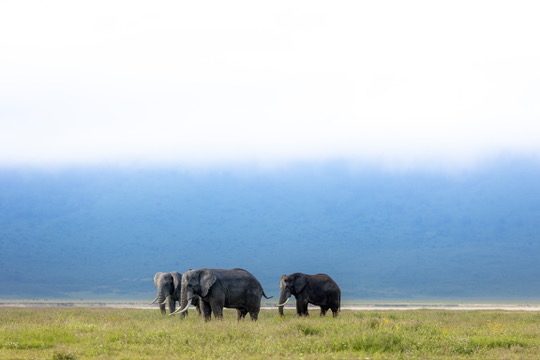
Ngorongoro Conservation Area
A UNESCO World Heritage caldera 610 metres deep and 20 kilometres wide - home to black rhino, the highest density of lion in Africa, and the Maasai people who have grazed these highlands for centuries.
- Crater floor
- 260 km²
- Depth
- 610 m
- Status
- UNESCO 1979
- Big Five
- All five
Guide to Ngorongoro Conservation Area
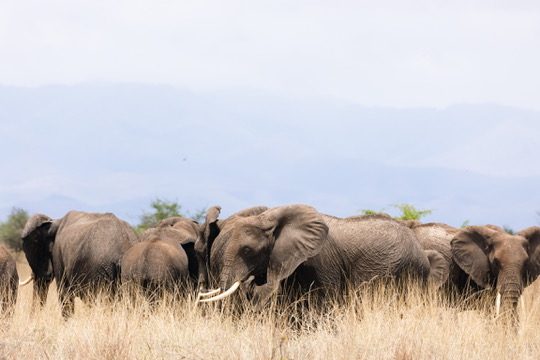
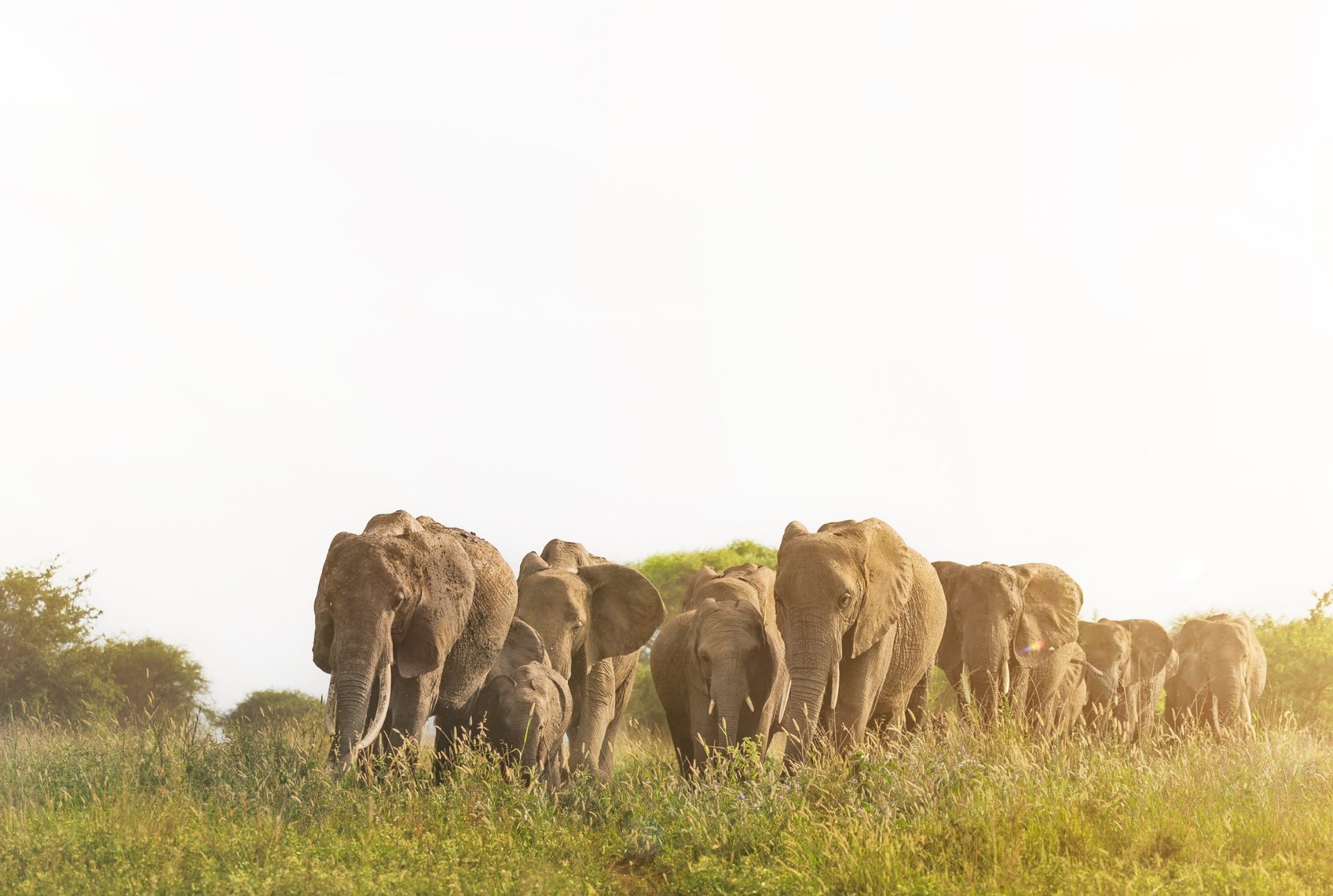
Tarangire National Park is renowned for its impressive elephant population and its iconic baobab trees that dominate the landscape. Spanning approximately 2,850 square kilometres, the park centres around the Tarangire River, a vital water source that attracts large numbers of wildlife during the dry season. Visitors can expect to encounter elephants, lions, leopards, cheetahs, giraffes, zebras, wildebeest, buffaloes, and a rich diversity of birdlife. Despite its extraordinary wildlife, Tarangire remains one of Tanzania's quieter parks, offering a more secluded safari experience.
The Ngorongoro Conservation Area is a unique protected landscape where wildlife and the indigenous Maasai communities coexist. At its heart lies the Ngorongoro Crater, the world's largest intact volcanic caldera, measuring approximately 260 square kilometres. Often referred to as Africa's "Garden of Eden," the crater supports one of the highest concentrations of wildlife on the continent, including the endangered black rhinoceros, lions, elephants, hippos, flamingos, and large herds of plains game. The conservation area is also recognised as a UNESCO World Heritage Site for its outstanding natural and cultural significance.
The Ngorongoro Crater is the largest intact volcanic caldera on earth - 20 kilometres wide, 610 metres deep, and holding within its walls a self-contained ecosystem of grassland, acacia forest, soda lake and swamp. On the crater floor, an estimated 25,000 large mammals coexist in an area the size of a small city, producing the most reliable Big Five game drive in Africa.
Ngorongoro is more than the crater. The wider Conservation Area covers 8,292 square kilometres of highland forest, extinct volcanoes, calving grasslands (Ndutu, on its northern edge, is where the Serengeti wildebeest give birth), the archaeological cradle of Olduvai Gorge, and 40,000 resident Maasai who continue to graze cattle across the rangelands under a unique multiple-use agreement. It is one of very few places in the world where humans, livestock and wildlife share a UNESCO landscape.
Why visit Ngorongoro
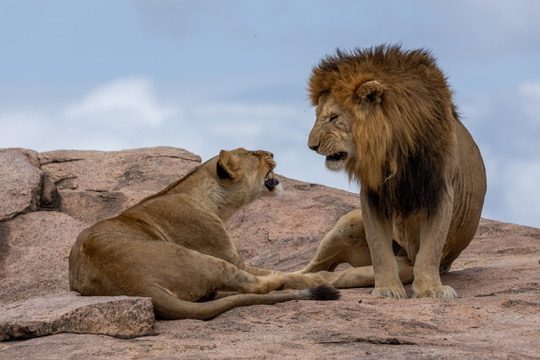
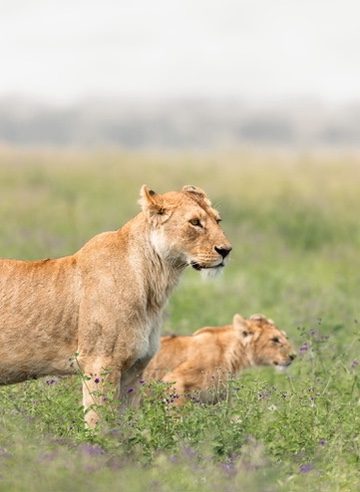
For visitors on their first African safari, the Ngorongoro Crater is the single most reliable Big Five sighting in Tanzania. In an average full-day drive on the crater floor we expect lion (three separate prides live within the caldera), elephant (a small but genetically distinct population of old bulls), buffalo (in herds of several hundred), black rhino (approximately 30 individuals, best sighted on the eastern floor) and the largest resident hippo population within a Tanzanian crater lake.
Beyond the crater, the Conservation Area holds Olduvai Gorge - where Mary and Louis Leakey uncovered the fossilised footprints and stone tools that reshaped our understanding of human evolution - and Ndutu, the southern extension where the Serengeti wildebeest gather to calve between January and March. Northern Circuit itineraries almost always include two nights on the crater rim, both for the wildlife and for the sunrises over the caldera.
History and cultural context
The Ngorongoro caldera formed some 2.5 million years ago when a giant stratovolcano - likely as tall as Kilimanjaro - collapsed on itself after a series of eruptions. The Maasai arrived in the region in the 17th and 18th centuries as part of a broader southward migration of Nilotic pastoralists from the Nile valley.
In 1959 the colonial administration created the Ngorongoro Conservation Area to accommodate the Maasai families displaced by the Serengeti's designation as a national park. Uniquely in East Africa, the Maasai retain the right to graze cattle within the Conservation Area and to live in traditional bomas across the highlands. The arrangement is not without tension - grazing pressure and human population growth are increasingly felt by wildlife - but it has produced one of the most complex and instructive protected areas in Africa.
Ngorongoro was inscribed as a UNESCO World Heritage Site in 1979 and designated a Biosphere Reserve in 1981. Olduvai Gorge, on the north-west edge, is separately listed among the world's most significant paleoanthropological sites.
Geography of the Conservation Area
The Conservation Area encompasses the crater itself, the surrounding highland forests and grasslands (rising to 3,648 metres at Loolmalasin), Olduvai Gorge, the salt lakes and grasslands of Ndutu, and the strange lunar landscape of the Empakaai and Olmoti craters to the north.
The main crater floor sits at 1,700 metres and takes about 30 minutes to descend from the rim via the single Seneto descent road. Only registered vehicles with a permit may enter, and vehicles must exit by 4pm - an important operational constraint for planning drives.
Wildlife on the crater floor
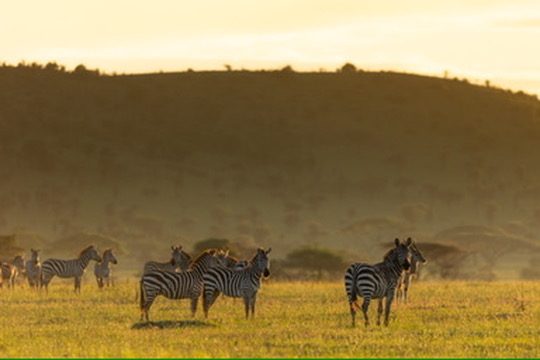
The Ngorongoro Crater holds an unusually dense concentration of resident wildlife because the caldera walls act as a natural barrier. Roughly 25,000 large mammals live permanently on the floor: 7,000 wildebeest, 4,000 zebra, 3,000 eland, 3,000 gazelle, 400 hippo, 60-70 lion in three prides, 30 black rhino, plus buffalo, elephant, hyena, jackal, serval and cheetah.
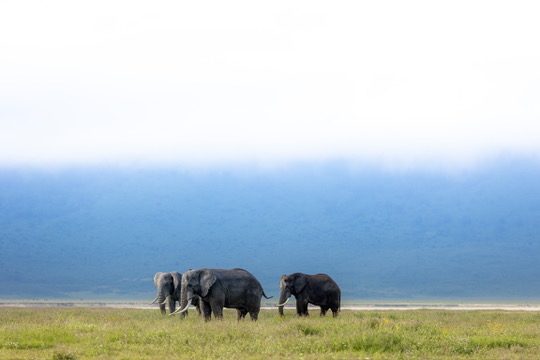
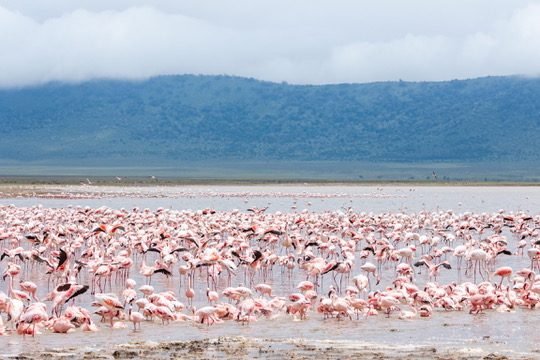
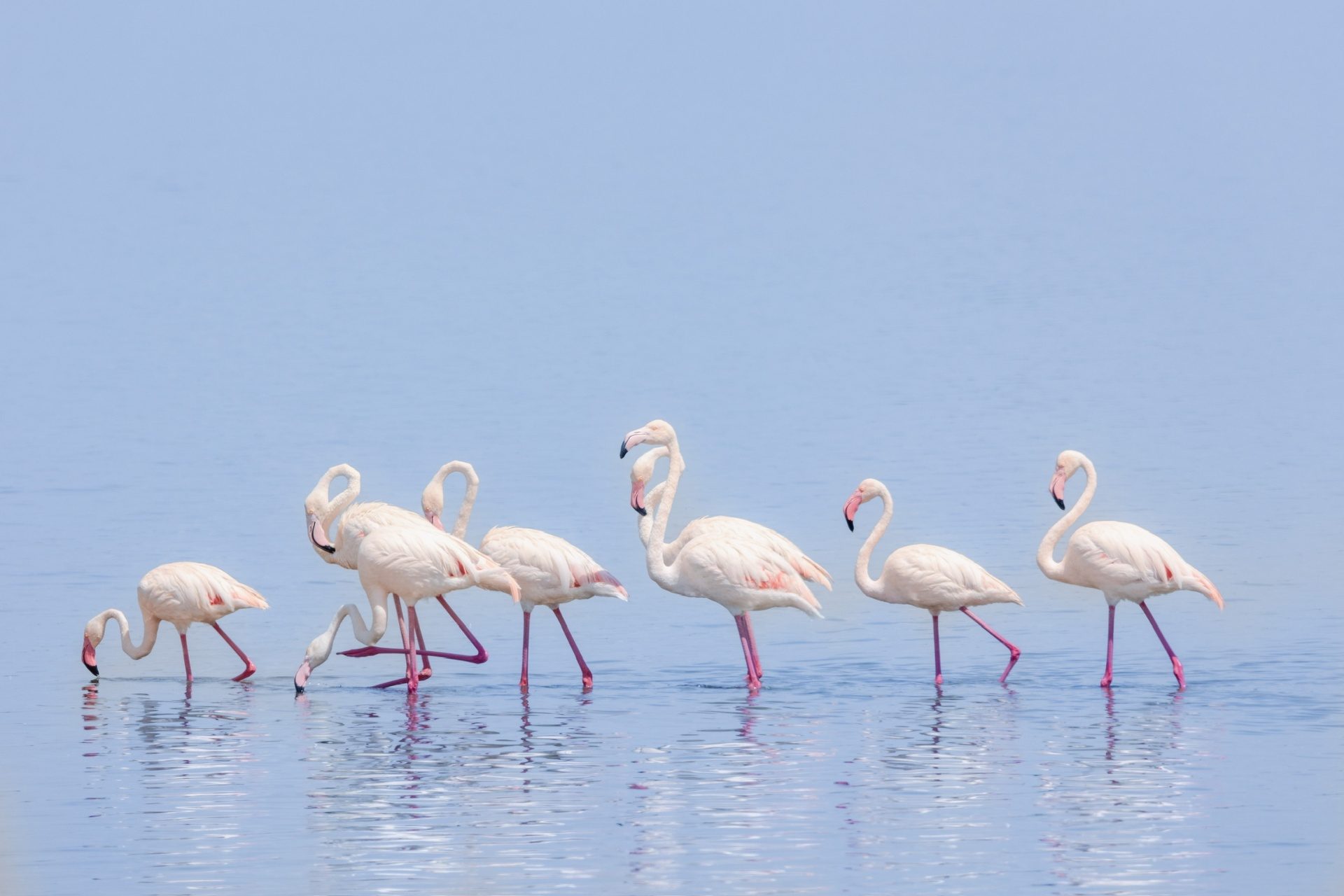
The eastern floor around the Munge Swamp and Ngoitokitok Springs is the most reliable area for rhino at dawn. Lake Magadi in the centre of the crater holds thousands of lesser and greater flamingos when water levels are right - typically after the November rains through May. The Lerai Forest at the base of the descent road is an elephant hotspot: old bulls, huge tuskers, retiring here in the last chapters of their lives.
The one Big Five species almost never seen on the crater floor is leopard - they occur in the crater rim forests but rarely descend. For leopard, we pair Ngorongoro with the Seronera Valley in the Serengeti.
Safari activities
The core activity is a full-day game drive on the crater floor, ideally starting from the rim at 6:30am with a packed picnic breakfast enjoyed at Ngoitokitok Springs. A morning-only crater drive returning to the rim by 1pm is the other common structure. We do not recommend two consecutive days in the crater - it is a compact ecosystem and one full day captures its essence.
Cultural visits to Maasai bomas in the Conservation Area are meaningful when arranged with our vetted community partners. Avoid the roadside villages that sell staged dances.
Olduvai Gorge is a half-day cultural excursion, ideally on the drive between the crater rim and the Serengeti or Ndutu. The visitor centre and paleoanthropology museum reopened in 2022 after a full refurbishment.
Empakaai and Olmoti crater walks with an armed ranger are excellent for active travellers - a 2-3 hour descent into a smaller flamingo-filled caldera without the crowds of Ngorongoro itself.
Photography
Ngorongoro presents photographers with two challenges: the crater floor is extensive and vehicles must stay on marked tracks, which limits angle choice; and midday light on the open floor can be harsh. Solutions: start at first light before descending, focus on wide environmental shots that put wildlife in the context of the caldera walls, and use a longer lens (500mm+) to isolate subjects across the plains. The Lerai Forest and Munge Swamp are the best mid-morning locations.
Birding
Over 550 bird species are recorded in the Conservation Area, split between the crater floor (flamingos, kori bustard, ostrich, secretary bird, augur buzzard), the highland forests (Livingstone's turaco, Schalow's turaco, white-eyed slaty flycatcher), and the acacia woodland around Ndutu. November through April brings the Palearctic migrants.
Family travel
The Ngorongoro Crater is one of the most compelling family safari destinations because sightings are so dense - young children stay engaged even on a long game drive because the action is continuous. Most rim lodges accept children from 6 years old; Gibb's Farm in Karatu (a 45-minute drive from the rim) welcomes younger children with a farm-based programme.
The high elevation (2,200 metres at the rim) means cool nights - pack warm layers and expect children to fall asleep quickly.
Honeymoon travel
For honeymooners the crater rim lodges deliver a specific atmosphere - fireplaces, blankets, wine, and views that fall away into the caldera at dawn. andBeyond Ngorongoro Crater Lodge is the most theatrical property in Tanzania; Gibb's Farm below Karatu is quieter and more romantic in a Kenyan colonial coffee-farm register.
Getting there
Ngorongoro is 3 hours by road from Arusha via the tarmac road through Karatu. The nearest airstrip is Lake Manyara (LKY), 45 minutes from the crater gate; charter flights from Arusha and Kilimanjaro serve it daily.
Most guests reach Ngorongoro as part of the driving Northern Circuit: Arusha → Tarangire (or Manyara) → Ngorongoro → Serengeti. Fly-in guests who want to include the crater typically add a night at the rim between Serengeti stays.
Travel tips from our guides
Descend at dawn. The 6:30am descent is worth the early alarm - the crater floor holds cold air and mist for the first hour, and hunts play out before the day warms.
Pack for altitude. The rim is at 2,300 metres and mornings are 8-12°C. Rim lodges have fireplaces for a reason.
Watch the exit time. All vehicles must be back on the rim by 4pm. Plan your day around it.
Cash for Olduvai. The museum entrance and the Maasai boma tips are cash-only. US$20 bills, post-2013.
Best time and month-by-month weather
The Ngorongoro Crater is a year-round destination and its wildlife density does not vary meaningfully by season. The main considerations are weather at the rim (cold in June-August, wet in April-May and November) and the wider Conservation Area's wildlife calendar - Ndutu holds the wildebeest calving from January to March.
| Month | High | Low | Rain | In the field |
|---|---|---|---|---|
| January | 23°C | 10°C | 60 mm | Warm crater floor, cool rim mornings. Ndutu calving nearby. |
| February | 23°C | 10°C | 70 mm | Peak calving in Ndutu; crater excellent. |
| March | 23°C | 11°C | 130 mm | Long rains starting; still workable. |
| April | 22°C | 11°C | 220 mm | Long rains peak. Some road closures on rim. |
| May | 21°C | 10°C | 170 mm | Rains ending. Green season value. |
| June | 20°C | 8°C | 20 mm | Cool and dry. Rim mornings 6-8°C. |
| July | 19°C | 7°C | 10 mm | Coolest month. Excellent visibility on floor. |
| August | 20°C | 8°C | 10 mm | Dry, cool, peak season demand. |
| September | 22°C | 9°C | 15 mm | Warming; peak season continues. |
| October | 23°C | 10°C | 40 mm | Dust rising. Excellent Big Five. |
| November | 23°C | 11°C | 110 mm | Short rains. Beautiful landscapes. |
| December | 23°C | 11°C | 80 mm | Festive high season. Book early. |
Curated camps and lodges
Rim lodges deliver the classic crater view but are 45 minutes from the descent road. Karatu-based lodges (30 minutes below the rim) are less dramatic but often better value and warmer.
The rim's most theatrical properties, from US$1,900 per person per night all-inclusive.
- andBeyond Ngorongoro Crater Lodge - Rim; iconic gothic-baroque design, private butlers
- The Highlands (Asilia) - Above Olmoti Crater, geodesic domes, boutique
Refined rim and Karatu lodges combining comfort with authentic character.
- Gibb's Farm - Karatu; historic coffee farm, gardens, spa
- Lemala Ngorongoro Camp - Rim; tented, exclusive location
- Neptune Ngorongoro Luxury Lodge - Karatu; all-inclusive, family-friendly
Comfortable rim and Karatu options combining ensuite comfort with good access.
- Ngorongoro Serena Safari Lodge - Rim; classic Serena standards, panoramic views
- Rhino Lodge - Rim; owner-run, forest edge, excellent value
- Country Lodge Karatu - Karatu; comfortable, warm, walking distance to town
Packing list for this destination
- Warm fleece and windproof jacket for the rim - it is genuinely cold
- Layered clothing for the crater floor (cold morning, warm afternoon)
- Sturdy walking shoes for Olduvai and Empakaai walks
- Binoculars and a long lens - the crater floor rewards reach
- Cash in small US$ bills for cultural tips and Olduvai entrance
Ngorongoro Conservation Area - your questions, answered
Let's plan your Ngorongoro Conservation Area safari.
Every Karis journey is designed one traveller at a time by our Arusha-based team. Share a few details and a specialist will send a hand-crafted proposal within 24 hours.