
Photographing the Big Five: a guide's honest advice
The camera matters less than the position of the vehicle. Here is what actually produces good safari images, from the person driving.
I have spent years watching guests photograph the same lion from the same distance and go home with wildly different pictures. The difference is almost never the camera body. It is the angle, the light, the patience, and whether the guide understood what the photographer wanted before the animal moved.
This is what I tell guests on day one, written down. It covers gear that earns its space, how to work with your guide, technique that suits a moving vehicle, and where in northern Tanzania each of the Big Five is most reliably found.
- Position beats focal length: ask the guide to reposition rather than zooming in tighter.
- The first and last ninety minutes of daylight produce most of the images worth keeping.
- A 100-400mm zoom plus a second body with a wide lens covers 90 percent of safari situations.
- Shoot from eye level where possible: drop lower in the vehicle rather than shooting down.
- Tell your guide what you are trying to make. A photographic day is planned differently from a sightseeing day.
Gear that earns its place
For most guests, one zoom in the 100-400mm range on a modern crop or full-frame body is the whole answer. It covers a lion at fifteen metres and an elephant herd at two hundred. A 600mm prime is glorious for birds and distant cats, and it is also heavy, slow to reposition, and useless when a leopard walks past the vehicle at four metres.
Carry a second body if you can, with something in the 24-70mm range. Landscape context, dust and light, your vehicle against the plains, camp at dusk. These are frequently the pictures people frame at home.
Bring more memory and more battery than you think. Charging happens on solar at camp, not in the vehicle. Bring a beanbag or a folded fleece to rest the lens on the roof hatch rail. Tripods are close to useless on safari.
Dust is the real enemy. Change lenses inside a closed bag, keep a rocket blower and microfibre cloths within reach, and accept that a clear filter on the front element is cheap insurance in October.
- One 100-400mm zoom, one 24-70mm, two bodies if possible
- Beanbag or folded jacket for the roof rail
- Spare batteries, double the cards, a rocket blower and cloths
- Neutral clothing, no bright white, and no drone: drones are illegal in Tanzanian national parks
Light, and why we leave camp before dawn
Between 06:15 and 08:00 the light is low, warm and directional, animals are active and dust hangs in the air in a way that turns an ordinary sighting into a photograph. The same is true from about 17:00 until the parks require you to be back.
Midday is for driving, lunch and shade. If you want to shoot at midday, look for behaviour that works in hard light: elephants throwing dust, hippo pods, birds on a bare branch against a blue sky.
Backlight is under-used. Ask your guide to put the sun behind the animal and expose for the highlights. A wildebeest column in backlit dust or a lion's rim-lit mane will beat a flatly lit portrait every time.
Working from the vehicle
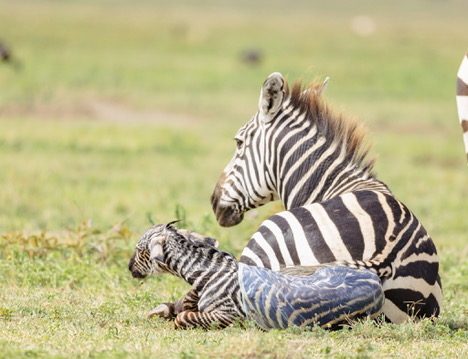
Our Land Cruisers have pop-up roofs and open sides, and both matter. Standing through the roof gives you height and a clean 360 view. Sitting and shooting through an open side window drops you closer to eye level, which makes portraits far more intimate. Learn to switch between them fast.
Ask the driver to switch the engine off. Vibration ruins slow shutter frames and noise shortens the sighting. Coordinate with the other people in the vehicle so nobody moves while someone is on a long lens.
A private vehicle is worth the upgrade if photography is the point of your trip. On a shared vehicle every stop is a negotiation. On a private one you can sit at the same waterhole for two hours because you believe something will happen.
Where to find each of the Big Five
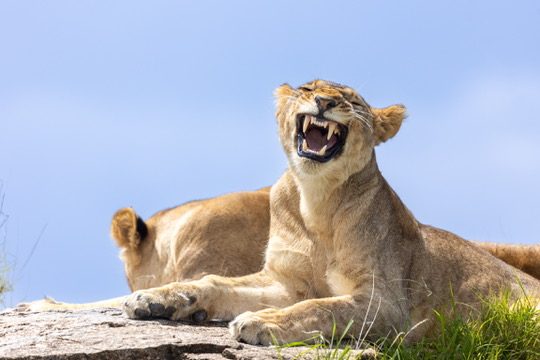
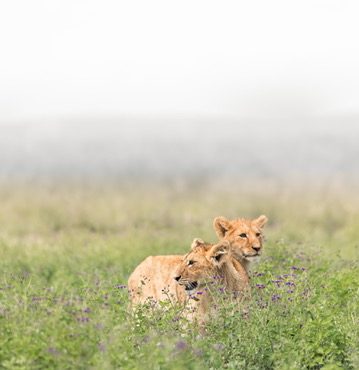
Lion. Reliable across Seronera year-round, on the Ndutu plains during calving, and in the Ngorongoro Crater where prides are habituated and visible. Look for kopjes in the late afternoon.
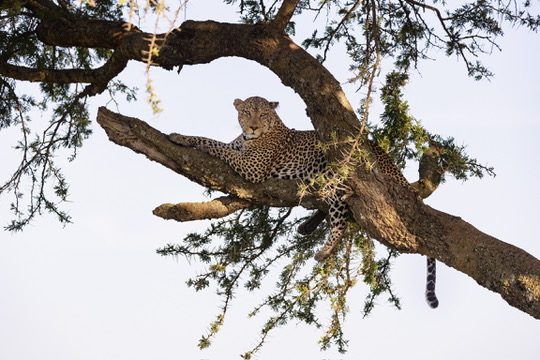
Leopard. The riverine forest along the Seronera River is the classic address, and Lake Manyara's groundwater forest produces sightings often. Patience is everything: a tail hanging from a sausage tree is usually the first clue.
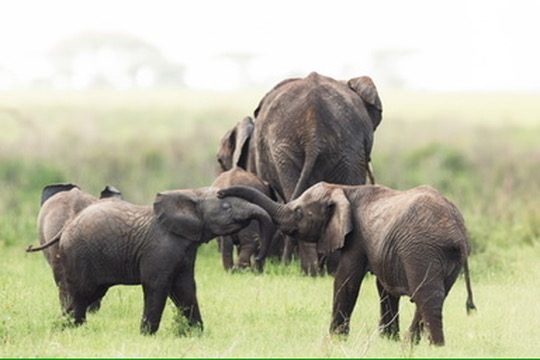
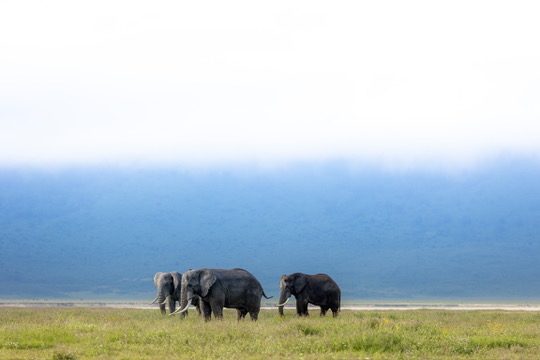
Elephant. Tarangire between July and October is one of the great elephant destinations on the continent, with herds of several hundred along the river. Manyara's forest elephants are more intimate.
Buffalo. Everywhere, and easiest in the Ngorongoro Crater and Tarangire swamps. Old bulls covered in mud in low light make far stronger images than a distant herd.
Rhino. Black rhino are realistically only seen in the Ngorongoro Crater, usually at distance on the Lerai side in the early morning, and occasionally around Moru Kopjes in the Serengeti under protection. Bring your longest lens and manage expectations.
Ethics in the field
No image is worth harassing an animal. We keep the required distances, we do not block a predator's line of approach, and we do not surround a cheetah with a kill. If a guide tells you the vehicle is going no closer, that is the animal's welfare talking, not caution.
Off-road driving is prohibited in Tanzanian national parks and enforced. Ndutu, being in the conservation area, has different rules, which is one reason calving season photography is so productive there.
Please ask before photographing people. In Maasai communities and in Arusha, a moment of consent produces both a better picture and a better relationship.
Questions we are asked about this
Itineraries built around this
More from the journal
Let us build this into your journey.
Tell us your dates and what matters most to you. A Karis journey designer in Arusha will reply with a tailored route, camps and full pricing.