
Ruaha National Park
20,226 square kilometres of miombo woodland, baobab valleys and the Great Ruaha river - Tanzania's largest national park, and the finest predator safari south of the Serengeti.
- Size
- 20,226 km²
- Africa's lions
- ~10%
- Elephants
- 12,000+
- Wild dog
- Resident
Guide to Ruaha National Park
Ruaha is what the Serengeti was 40 years ago. Tanzania's largest national park sees roughly 8% of the visitor numbers of the Northern Circuit but holds more lions than anywhere else in East Africa, one of the continent's most stable populations of African wild dog, huge herds of elephant, and a scale that repeat safari travellers describe as the wildest they have found in Tanzania.
The park is the meeting point of southern miombo woodland and eastern acacia savannah, which is why Ruaha holds species from both zones - greater and lesser kudu together, roan and sable antelope alongside impala, southern ground hornbill alongside grey-crowned crane. The Great Ruaha river, which loops through the park's south-east, is the year-round wildlife magnet.
Why visit Ruaha
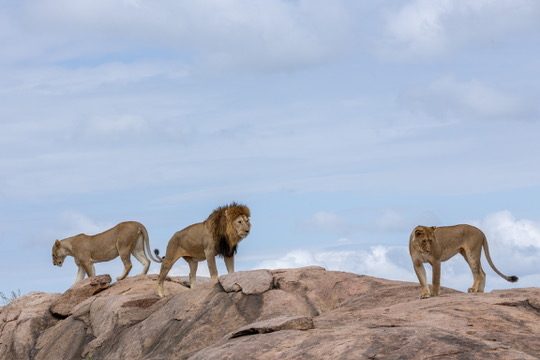
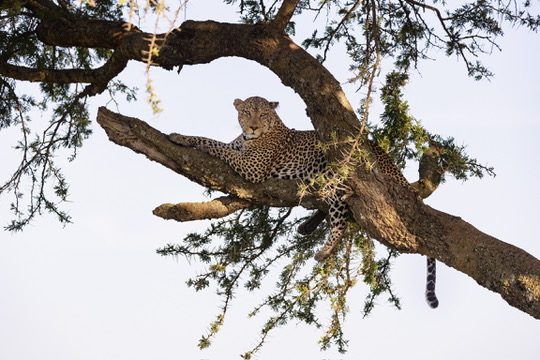
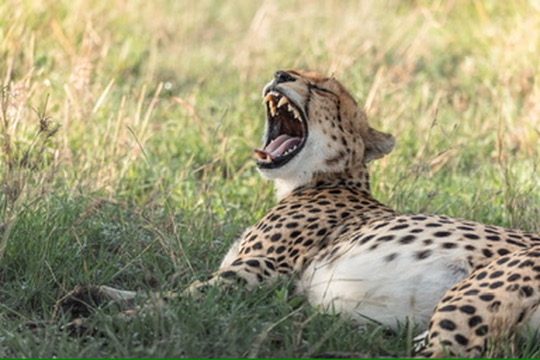
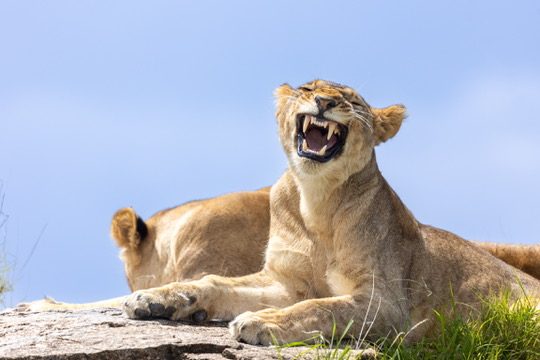
For predators. Ruaha's Msembe and Mwagusi lion prides regularly number 15-25 individuals - the largest social groups documented in Africa. Leopard sightings on the sand rivers are consistent. African wild dog is resident and denning is observed most years between June and August. Cheetah, striped hyena, side-striped and black-backed jackal round out one of the richest carnivore guilds on the continent.
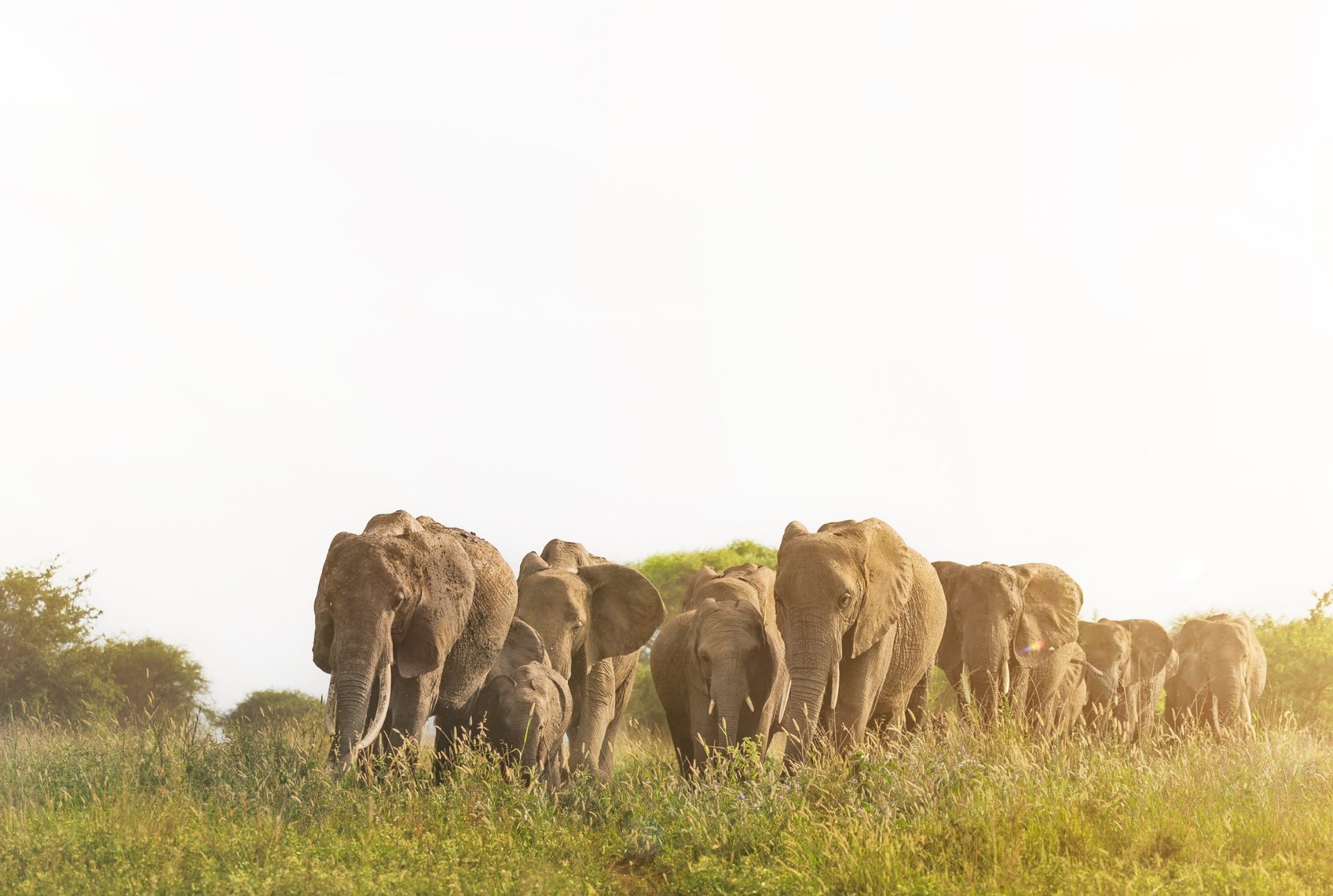
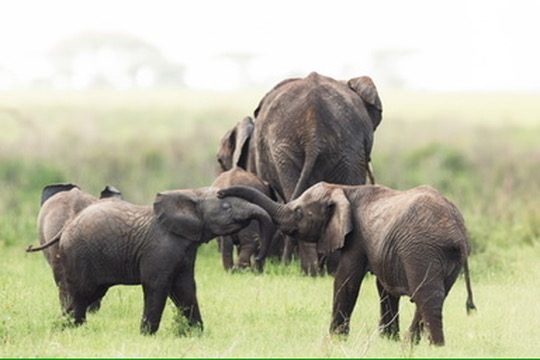
For elephants. Ruaha's elephant population - devastated by poaching in the 1970s and again during the 2010-2015 crisis - has been steadily recovering under a decade of intensified anti-poaching investment. Numbers now sit at approximately 12,000 with visible calving.
For solitude. Ruaha typically hosts fewer than 20 vehicles at any given time across a park two-thirds the size of Belgium. Sightings are effectively private.
Geography
Ruaha sits on the transitional plateau between the Rift Valley to the north and the Great Miombo woodland to the south, at 750 to 1,830 metres elevation. The Great Ruaha and Mwagusi rivers dominate the east and centre of the park; further west the country opens into extensive miombo and dry acacia bushveld. The wider Ruaha-Rungwa ecosystem - including neighbouring Rungwa, Kizigo and Muhesi Game Reserves - covers approximately 45,000 square kilometres and holds one of the largest continuous wildlife populations left in Africa.
Wildlife
Big Five present, though rhino sightings are effectively zero. Ruaha is the only park in Tanzania where you can see greater and lesser kudu on the same drive, along with sable, roan, southern reedbuck and Lichtenstein's hartebeest.
The park holds approximately 570 bird species. October to April is peak birding when the Palearctic migrants swell resident numbers.
Activities
Game drives, walking safaris (with an armed KDU-trained ranger, offered by most quality camps), and fly-camping under the stars are all standard. Night drives are not permitted inside the national park but are offered from Kwihala's private camp area outside the boundary. Fly-camping is a Ruaha specialty - one or two nights sleeping in classic canvas bedrolls on a sand river, guided by an armed walker.
Getting there
Ruaha is fly-in only for practical purposes. Scheduled flights from Dar es Salaam, Selous/Nyerere and Zanzibar to Msembe (MSE) or Jongomero airstrips are 90-120 minutes. Coastal Aviation and Auric Air are the primary operators. Driving from Dar es Salaam is possible but takes 10-12 hours and is not something we recommend.
Travel tips
Stay four nights minimum. The scale of Ruaha rewards depth. Anything less and you sacrifice walking safaris and fly-camping to logistics.
Combine with Nyerere. The classic Southern Circuit is Nyerere + Ruaha + Zanzibar, 10 nights total. It rivals any Northern Circuit itinerary and sees a fraction of the traffic.
June-October for maximum concentration. Wet-season Ruaha is beautiful but wildlife is far more dispersed.
Best time and month-by-month weather
Ruaha's dry season (June to October) concentrates wildlife spectacularly along the rivers. The wet season (November-May) brings dramatic landscapes, migratory birds and lower rates but disperses the wildlife.
| Month | High | Low | Rain | In the field |
|---|---|---|---|---|
| January | 31°C | 20°C | 150 mm | Green season. Baby impala; some camps closed. |
| February | 31°C | 20°C | 160 mm | Wettest month. Most camps closed. |
| March | 31°C | 20°C | 150 mm | Rain easing. Excellent birding. |
| April | 30°C | 19°C | 80 mm | Green and quiet. Camps reopening. |
| May | 29°C | 17°C | 20 mm | Landscape at its greenest. |
| June | 28°C | 15°C | 5 mm | Dry season begins. Wildlife returning to rivers. |
| July | 28°C | 14°C | 0 mm | Cool nights, excellent game viewing. |
| August | 29°C | 15°C | 0 mm | Peak dry season. Predator action superb. |
| September | 31°C | 17°C | 5 mm | Best month. Everything on the river. |
| October | 33°C | 19°C | 20 mm | Hot and dusty. Most intense wildlife. |
| November | 32°C | 20°C | 80 mm | First rains. Landscape transforming. |
| December | 31°C | 20°C | 120 mm | Green season underway. Quieter. |
Curated camps and lodges
Ruaha's camps are almost universally small, high-quality and guided by senior professionals. There is no midrange lodge tourism to speak of.
Small owner-run camps and semi-permanent tented properties, US$900-1,600 per person per night.
- Jongomero (Selous Safari Company) - Deep south of park, sand river, exceptional guiding
- Kwihala Camp (Asilia) - Central, seasonal, world-class walking
- Mwagusi Safari Camp - Owner-run, on the Mwagusi sand river, classic Africa
- Ikuka Safari Camp - Boutique escarpment property, dramatic setting
Limited midrange options; the Tanzania Parks-run Ruaha River Lodge is the reliable choice.
- Ruaha River Lodge - Long-established, riverside, family-run since 1982
Packing list for this destination
- Warm layer for cold July mornings (10°C possible)
- Long trousers and closed shoes for walking safaris
- Wide-brim hat and sun protection - October is intense
- Head torch for evenings around camp
Ruaha National Park - your questions, answered
Let's plan your Ruaha National Park safari.
Every Karis journey is designed one traveller at a time by our Arusha-based team. Share a few details and a specialist will send a hand-crafted proposal within 24 hours.