
Nyerere National Park (Selous)
30,000 square kilometres of miombo, palm groves and the meandering Rufiji river - the largest UNESCO-listed wilderness in Africa and Tanzania's most versatile safari destination.
- Size
- 30,893 km²
- Status
- UNESCO 1982
- Feature
- Rufiji river
- Wild dog
- Africa's largest population
Guide to Nyerere National Park (Selous)
In 2019, the Tanzanian government reorganised the northern third of the historic Selous Game Reserve into Nyerere National Park - named after the country's founding president. The Selous name persists in tourism, and the two are used interchangeably: what changed is that the park now enjoys full national park protection with hunting excluded.
Nyerere is Tanzania's most versatile safari destination. It is the only park in the country where you can do a boat safari on a major river system (the Rufiji, with its network of oxbow lakes), walk with an armed guide in classic bush country, and drive a full day without seeing another vehicle. For photographers, honeymooners and repeat safari travellers, it is often the finest single-destination Tanzania safari.
Why visit Nyerere
Three activities you cannot combine in the Northern Circuit: boat safaris on the Rufiji at sunset (elephant crossing, hippo pods, giant crocodile), walking safaris through classic Selous woodland with an armed KDU-trained ranger, and fly-camping under the stars on a Rufiji island. Add the resident wild dog population - the largest in Africa, with reliable denning between June and September - and Nyerere becomes a destination in its own right rather than a Serengeti alternative.
Geography
Nyerere sits on the north side of the wider Selous ecosystem. The Rufiji river, Tanzania's largest, cuts through the park east to west, feeding a system of oxbow lakes and swamps (Lake Manze, Lake Nzerakera, Siwandu) that concentrate wildlife year-round. To the north the miombo woodland rises gently toward the Beho Beho hills, and to the south the country opens into hunting concessions and the vast southern Selous.
Wildlife
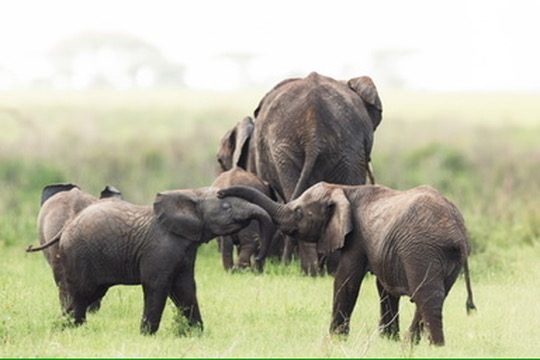
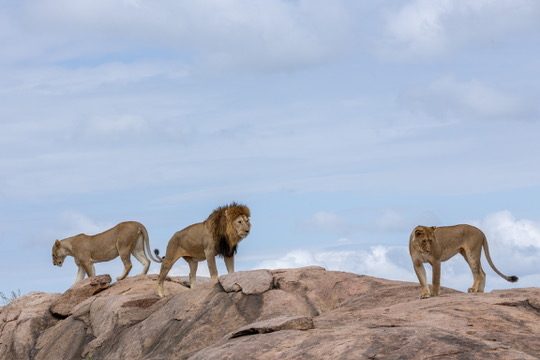
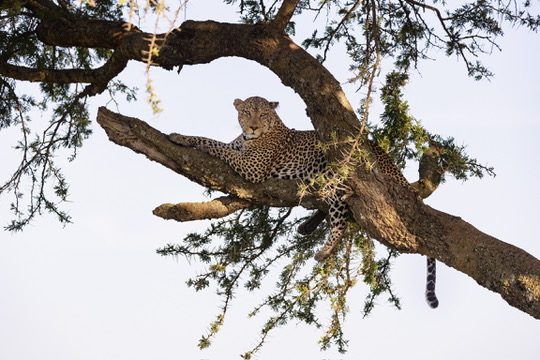
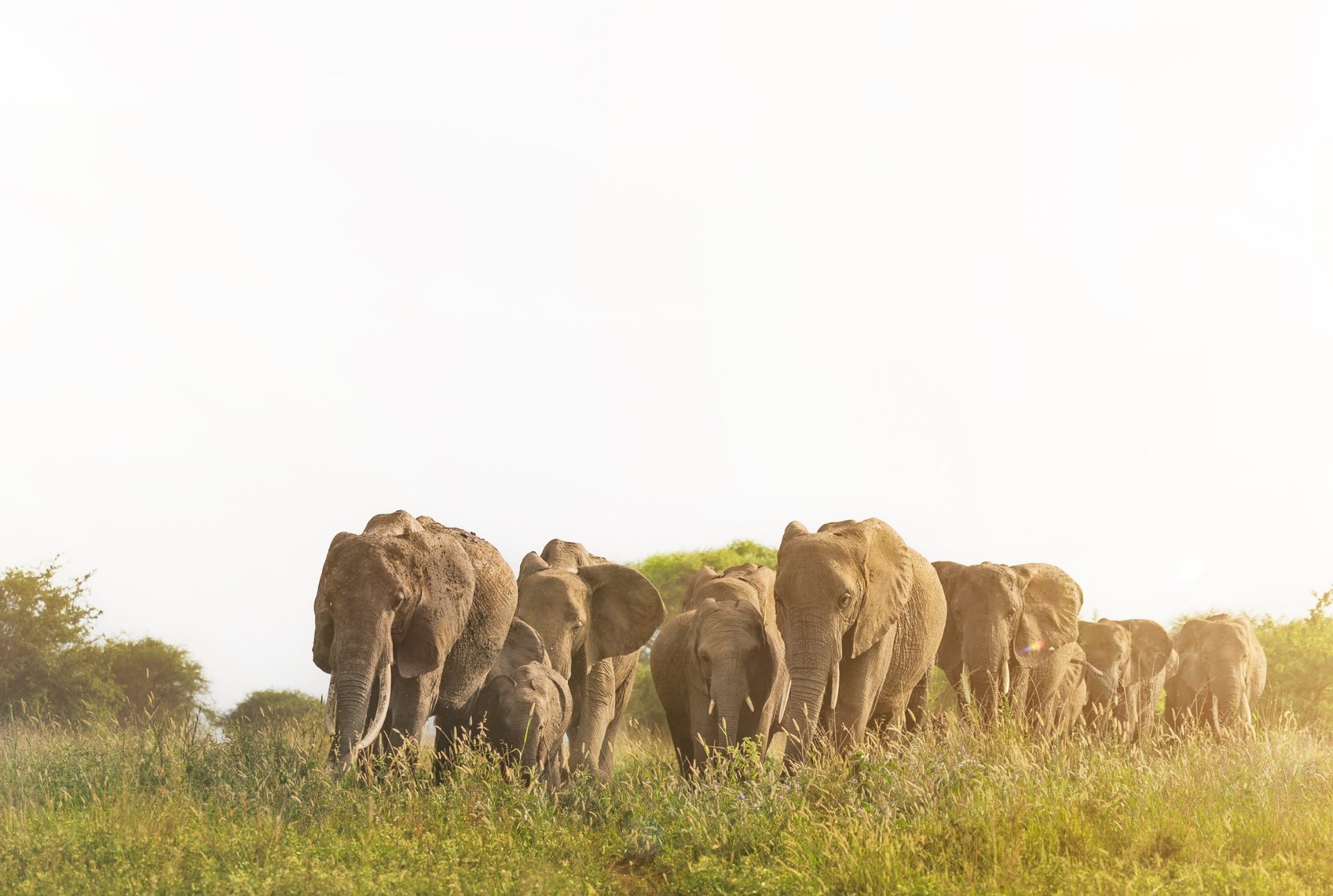
Big Five present. Rhino sightings are effectively zero. Wild dog is the star, with reliable denning June-September. Elephant, buffalo and lion populations are recovering strongly from the pre-2015 poaching crisis. Nyerere holds greater kudu, sable antelope, Nyasa wildebeest, hartebeest, waterbuck, and one of Tanzania's largest hippo populations in the Rufiji and its lakes.
Over 440 bird species have been recorded. The Rufiji system is a birder's paradise - African skimmer, palm-nut vulture, giant kingfisher, white-fronted bee-eater colonies along the banks.
Activities
Boat safaris on the Rufiji are Nyerere's signature - a 3-hour late-afternoon flat-boat cruise ending at sunset, watching elephant come down to drink and crocodile basking on the sandbanks. Every quality camp offers boat drives.
Walking safaris are permitted throughout, always with an armed ranger. Half-day walks starting at dawn from camps such as Sand Rivers or Beho Beho are among the best in East Africa.
Fly-camping for one or two nights on a Rufiji sandbank, sleeping in classic canvas bedrolls, guided by an armed walker. The finest immersive experience in the park.
Getting there
Fly-in only in practical terms. Scheduled flights from Dar es Salaam, Zanzibar and Ruaha to Siwandu, Beho Beho, Kiba and Mtemere airstrips take 45-90 minutes. Coastal Aviation, Regional Air and Auric Air operate.
Travel tips
Stay four nights minimum. Three activities per day means you cannot do the park justice in less.
Combine with Zanzibar. Direct flights make Selous + Zanzibar the most efficient safari-and-beach combination in Tanzania - 7 nights minimum.
Dry season is essential. June to October only. Camps close January through March.
Best time and month-by-month weather
Nyerere is a strongly seasonal park. Camps close for the long rains in most years. The safari season runs June through mid-March, with a strong peak in July-October.
| Month | High | Low | Rain | In the field |
|---|---|---|---|---|
| January | 32°C | 22°C | 80 mm | Green season; some camps open. |
| February | 32°C | 22°C | 100 mm | Most camps closed. |
| March | 31°C | 22°C | 150 mm | Wettest. Closed. |
| April | 31°C | 22°C | 220 mm | Long rains peak. Closed. |
| May | 30°C | 20°C | 110 mm | Rain easing; camps reopening late month. |
| June | 29°C | 17°C | 20 mm | Dry season begins. Wild dog denning. |
| July | 29°C | 16°C | 5 mm | Excellent. Wild dog denning peak. |
| August | 30°C | 17°C | 5 mm | Cool nights, superb game viewing. |
| September | 31°C | 18°C | 10 mm | Best month in our view. |
| October | 33°C | 20°C | 40 mm | Hot; wildlife concentrated at water. |
| November | 33°C | 22°C | 80 mm | First rains; landscape softening. |
| December | 32°C | 22°C | 100 mm | Green season; festive demand. |
Curated camps and lodges
Small, exceptional camps clustered around the northern Rufiji lakes and along the river system.
The finest properties in the Southern Circuit.
- Sand Rivers Selous - Iconic Nomad Tanzania flagship on a Rufiji bend
- Roho ya Selous (Asilia) - Boutique, superb guiding, private feel
Excellent tented camps with three-activity guiding.
- Siwandu (Selous Safari Company) - Lake Nzerakera; classic tented safari
- Beho Beho - Elevated stone lodge, hilltop views
- Selous Kulinda Camp - Boutique, riverfront, family-friendly
Packing list for this destination
- Warm layer for June-August evenings on the boat
- Long trousers and closed shoes for walking safaris
- Sun protection - the river sun is intense
- Insect repellent - tsetse in some drainage areas
Nyerere National Park (Selous) - your questions, answered
Nearby destinations
Let's plan your Nyerere National Park (Selous) safari.
Every Karis journey is designed one traveller at a time by our Arusha-based team. Share a few details and a specialist will send a hand-crafted proposal within 24 hours.